

How Are Custom LEGO Sets Designed? From Digital Model to Physical Build

Ever wondered how a custom LEGO-style set goes from an idea to a fully functional physical model?
At Drippybricks, we design custom brick-built models, including transforming mechs, vehicles, creatures, and personalized commissions. Throughout this article, we'll use a fan-built Bumblebee model as an example of the digital design, engineering, and physical testing process.
Here's how the process works.
1. How Custom LEGO Sets Are Designed: Planning the Process
Every custom set begins with an idea. Understanding how custom LEGO sets are designed means looking beyond digital modeling to the engineering, physical testing, and instructions that bring each creation to life. For commissions, customers submit their concepts, preferred dimensions, and requested features.
We evaluate each request to determine its feasibility, complexity, and the best approach to construction before beginning the design.
2. Digital Design in BrickLink Studio
Once the concept is approved, we begin designing in BrickLink Studio, a 3D modeling program specifically developed for brick-built creations.
During this stage, we focus on appearance, structural stability, piece selection, and functionality. This allows us to experiment with different building techniques and refine the model before physically assembling it.

3. Engineering and Functionality
Some custom sets require more than just an attractive appearance.
Transforming mechs need reliable joints and moving sections, while vehicles may feature opening doors, retractable landing gear, or functional mechanisms.
These features must be integrated without compromising the model's stability or overall design.
4. Physical Playtesting
A design that works digitally doesn't always work perfectly with real bricks.
That's why we physically assemble and playtest our models, checking connection strength, stability, moving mechanisms, and overall durability.
Any issues discovered during testing are corrected before the design is finalized.
5. Creating Building Instructions
Once playtesting is complete, we develop step-by-step building instructions.
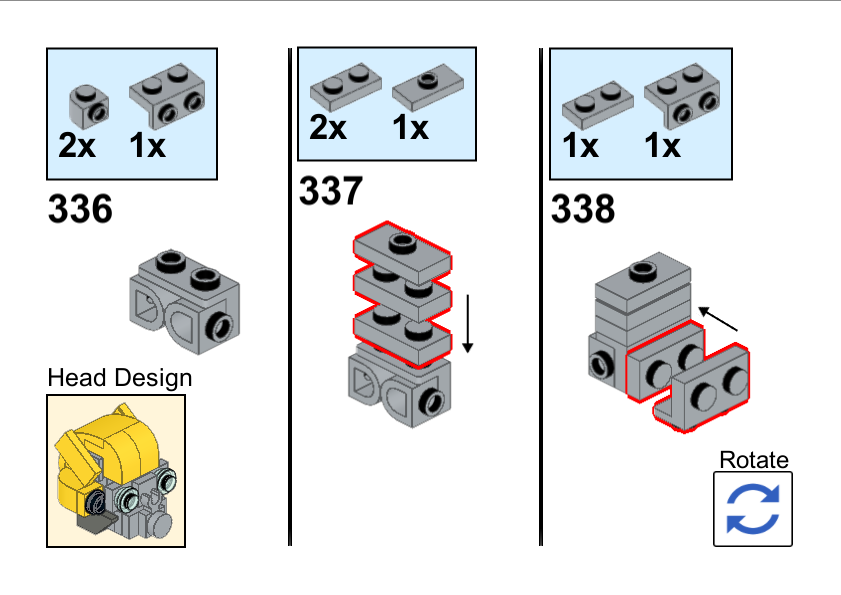
Our instructions include clear assembly diagrams, submodels, rotation indicators, and part placement callouts when needed.
The goal is to make the building experience straightforward, even for more complex designs.
6. The Finished Custom Set
After the design, testing, and instructions are complete, the required pieces are sourced and prepared for delivery. The result is a custom brick-built set that combines thoughtful engineering, functional features, and a satisfying building experience.
Bring Your Own Custom Set to Life
Have an idea for a custom brick-built model?
At Drippybricks, we handle the process from digital design and physical testing to building instructions and final production.
Explore more original designs at Drippybricks.com.

Comments